Tiffany Henry

Tiffany Henry

Designing a Framework for Expanding Rural Ecosystem Building

New Startup Champion Tiffany Henry is the Rural Director at Conductor in Conway, Arkansas. In her role as an entrepreneurial ecosystem builder she works with communities to create cultures of innovative problem solving and helps to grow entrepreneurs by connecting them with resources and partnerships to help them succeed. We interviewed Tiffany to learn more about her thoughts on rural entrepreneurial ecosystem building, as well as her hopes as a new member of SCN.

Tiffany Henry (left) after giving a presentation to the local Kiwanis chapter about 1 Million Cups.

Tiffany Henry (left) after giving a presentation to the local Kiwanis chapter about 1 Million Cups.

 What roles or functions do you play in your ecosystem?

The Conductor is a public-private partnership based out of central Arkansas that supports innovators and entrepreneurs through mentoring, accelerator and bootcamps, a makerspace, meet-ups, and other similar activities. We recently received a grant from the SBA to expand our offerings to ten rural counties surrounding our home base. My role is to build the infrastructure and oversee the expansion, and to hire and train local ecosystem builders who will tailor the programming to their community’s needs. 


What is your definition of an ecosystem builder?

An ecosystem builder sees the possibilities for innovation, progress, and connectedness in their community, and believes that supporting and strengthening entrepreneurs is the force that brings those possibilities to life. Similar to building a house, a mason would want to be sure his structure is as strong as possible, with the right ratio of brick and mortar to hold it all together. An ecosystem builder wants to make their community as strong as possible, pulling together entrepreneurs and the support resources to create a cohesive and sturdy structure that can hold the weight of comprehensive economic development. However, one major difference is an entrepreneurial ecosystem is fluid and constantly changing and adapting, therefore an ecosystem builder’s work is never finished! 


What are the biggest challenges you face in ecosystem building?

The biggest challenges I face in ecosystem building align with ESHIP Goal 1: Inclusive Field and ESHIP Goal 6: Universal Support. Rural communities can be overlooked as places that spur innovation and that have a robust talent. Particularly as it pertains to tech companies and remote work opportunities. Infrastructure barriers are what prevents rural communities from thriving, not a lack of vision or grit. The external perception of there being minimal value in building a rural ecosystem is a challenge, as well as advocating for inclusion of the rural perspective in policy discussions. 

Barriers of inclusivity and universal support are also seen within the communities as well. Close relationships and family histories can be a hurdle to overcome, which are typically magnified by personal identity markers like church affiliation, political views, or cultural differences. One of the coolest things about being an ecosystem builder is to see these challenges as opportunities for learning and growing together, because ultimately most people share the same goal of seeing their community and economy grow and thrive. 


What is the most successful/impactful program you have done in your ecosystem? 

One of the things I am most proud of is my home town of Russellville, Arkansas receiving a Local Foods Local Places (LFLP) award from the EPA to provide consulting for a culinary incubator/makerspace. This project is a public-private partnership between the city and our local university, where the city owns the building and the university coordinates the programming. This two year saga has involved lots of personal outreach to the city and university, prodding for progress. Activities included having the Mayor and university Vice President present at 1 Million Cups to spark external support, host the Mayor and VP with their staff on a multi-city tour of other makerspaces in the state and hear from their local entrepreneurs about the benefits of the space, presenting to Main Street Russellville about the opportunities for this project and how they can get involved, and last but not least, writing the LFLP proposal and providing it to the city to submit along with all the necessary support letters. We were notified a few months ago we were accepted into the program, and our first community meeting is in September. All of these actions I took outside of any official job or capacity, but as a passionate member of my community. I consider this to be the most successful thing I have done for the ecosystem because It was through this experience that I realized that I am an ecosystem builder. It has been very rewarding to see relationships and partnerships that were formed through this process continue to blossom and grow and I look forward to watching the huge impact I know the culinary incubator/makerspace will make in my community. 


What is your biggest frustration as an ecosystem builder?

My biggest frustration as an ecosystem builder is when people or organizations are not interested in collaborating. It is doubly frustrating when there is a person who wants to connect their resources, but their governing organization does not. For example, when we were forming our 1 Million Cups organizing team, a staff member from the Chamber of Commerce totally understood what we were doing and saw the benefits of the program. She wanted to be involved and saw the potential for the Chamber to connect to early stage startups. However, the Executive Director of the Chamber did not see the value of supporting early stage entrepreneurs and preferred his staff focus on typical economic development avenues. I get frustrated because I know ecosystem building works, and I know that eventually when programs are successful people want to be on board. I just prefer they cooperate from the beginning!


What ecosystem building skill or knowledge do you want to gain? 

I want and need to continue to learn how to be more inclusive. It is a repeated topic of discussion of my team, and the number one priority as we design programming and evaluate our successes and opportunities for growth. There is no ecosystem without diversity, and I hope to always be one who contributes to a society of equitability and justice.


What’s next for you as far as ecosystem building?

My next step for ecosystem building is designing the framework for the rural expansion of our work at the Conductor. This is an unprecedented opportunity for the state of Arkansas, as we have been awarded a grant to identify and train ecosystem builders to run their own programming in their communities. In addition to the SBA award, we also are included in the Kauffman Inclusion Open to bring our 10x Accelerator to six rural regions through what we are calling the 10X Rural Growth Program. Each region will have 5-10 companies who will go through 5 weeks of startup curriculum followed by one-on-one mentorship and coaching. I am so excited to bring these programs to the entrepreneurs in rural areas, and can’t wait to develop ecosystem builders who will serve to strengthen our communities and our state!


What motivates you as an ecosystem builder?

I am powered by the “A-ha!” moments when connections are made and needs are filled for entrepreneurs. I was working with an entrepreneur who was frustrated by perceived opaqueness from her city government. I asked if she had seen contradictions between what was said at city council meetings and the subsequent actions taken in the community. When she told me she had never attended a city council meeting I said she should go and see for herself what was being discussed. I could almost see a literal light bulb turn on in her head as she realized she could be a part of the conversation if she would just take action and go. I am motivated when I see others empowered to be the change they want to see in their communities. 


What are the most important things that need to happen to advance the field of ecosystem building?

I think ESHIP Goal 2: Collaborative Culture is one of the most important things that needs to happen to advance the field of ecosystem building. Because of some ESO objectives and funding models, there can be a sense of competitiveness and fear if support for a newly created venture is credited to a particular organization. While meeting objectives and maintaining funding are legitimate concerns, fostering a spirit of uncooperativeness is the totally wrong approach to strengthening the ecosystem and does a disservice to the entrepreneur. I firmly believe a rising tide lifts all ships, and when builders and organizations can learn how to work together in healthy and supportive ways everyone succeeds. 


You've just joined SCN. What does it mean to you to be an SCN member or what are you hoping you can get from SCN? 

I am so excited to be a part of SCN!!! It is such a joy and a privilege to join this dynamic group of innovators, doers, makers and dreamers. As I have been growing in the field over the last few years, whenever I would read an article or interview that was particularly impactful, or talk to a person that was so energized and insightful, it would more likely than not be an SCN member. I love the diversity of the SCN membership and that the summits are always in new places. I hope to gain wisdom from the deep experience of the group and form lots of friendships with incredibly inspirational people. 


Are you planning to attend the Madison Summit and what do you hope to learn or accomplish at the Summit? 

I am not attending the Madison Summit because the RuralRise Summit is at the exact same time. RuralRise will be in Pine Bluff Arkansas this year, so I definitely need to go and support my state that I love so much! I appreciate that SCN summits are so frequent, I look forward to attending the next one!


What do you hope to contribute to SCN? What skills or interests are you hoping to share?

I hope to bring encouragement and positivity to SCN and for members to know I am always on their team. I am skilled at listening and communicating and tend to be bent towards empathy and compassion. I hope to contribute to the knowledge bank with perspectives and experience from the rural space and provide as many connections and resources as possible to help other ecosystems thrive. 

How Scott Resnick Is Changing the Startup Ecosystem in Madison, Wisconsin

How Scott Resnick Is Changing the Startup Ecosystem in Madison, Wisconsin

The University of Wisconsin, whose campus sprinkles the landscape of Madison, is a hotbed for learning, entrepreneurship, and research. It has been ranked “Top 10” in national research spending every year since 1972, “Top 10” in producing Fortune 500 CEOs, and 19 Nobel Prize awards have been given to UW faculty and alumni. 

It’s no wonder why Scott Resnick was drawn to the University and why, as a student there, he co-founded his first and second companies. While living in Chadbourne Hall, he partnered with his dorm neighbor and friend Jon Hardin to found InZum, an online video streaming software business that ended up failing. 

It didn’t take long for the two to come back together and co-found their second company, Hardin Design and Development, where Scott is now the COO. Hardin builds enterprise-related applications for Fortune 500 companies. Its list of clients is impressive. FedEx, AT&T, the U.S. Postal Service, CNN, Toyota… just to name a few. The company has won top honors at the Consumer Electronics Show, their work has appeared in Apple Computer’s iPad commercials, and they were named one of the city’s best places to work by Madison Magazine.

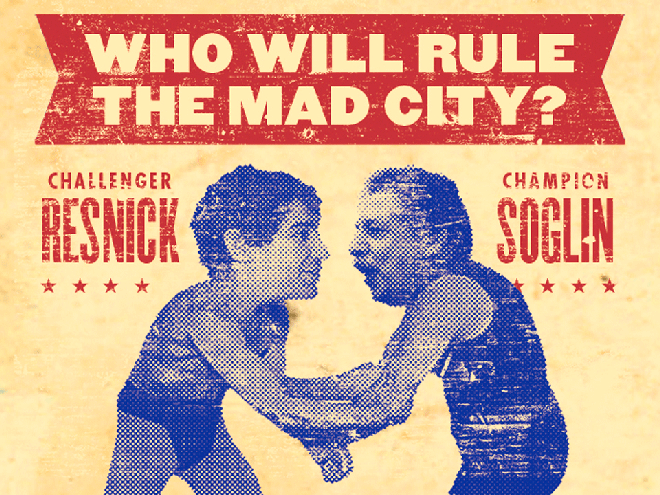
But starting a major tech firm and being a huge success was not enough for Scott. Like other members of Startup Champions Network, he’s passionate about civic engagement and entrepreneurial growth. In 2011, Scott was elected to the city council and was re-elected in 2013. He was the youngest City Council member for any major metropolitan city. In 2015, with a vision for Madison to have an innovative, open, and transparent government, he put his hat in the ring for mayor. 

His vision? To create “the most open and transparent municipal government in the country that proactively responds to climate change and a city that’s a hub for creativity and innovation in economic development, the arts, basic services and interacting with residents,” he told the Cap Times during the mayoral race. “The city must deal with the achievement gap, racial inequities, homelessness and transportation.”

Scott-Mayor.gif

While he didn’t win the mayoral race, he was a strong contender. After that experience, he set his sights on other ways he could improve Madison and spur entrepreneurial growth in his city.

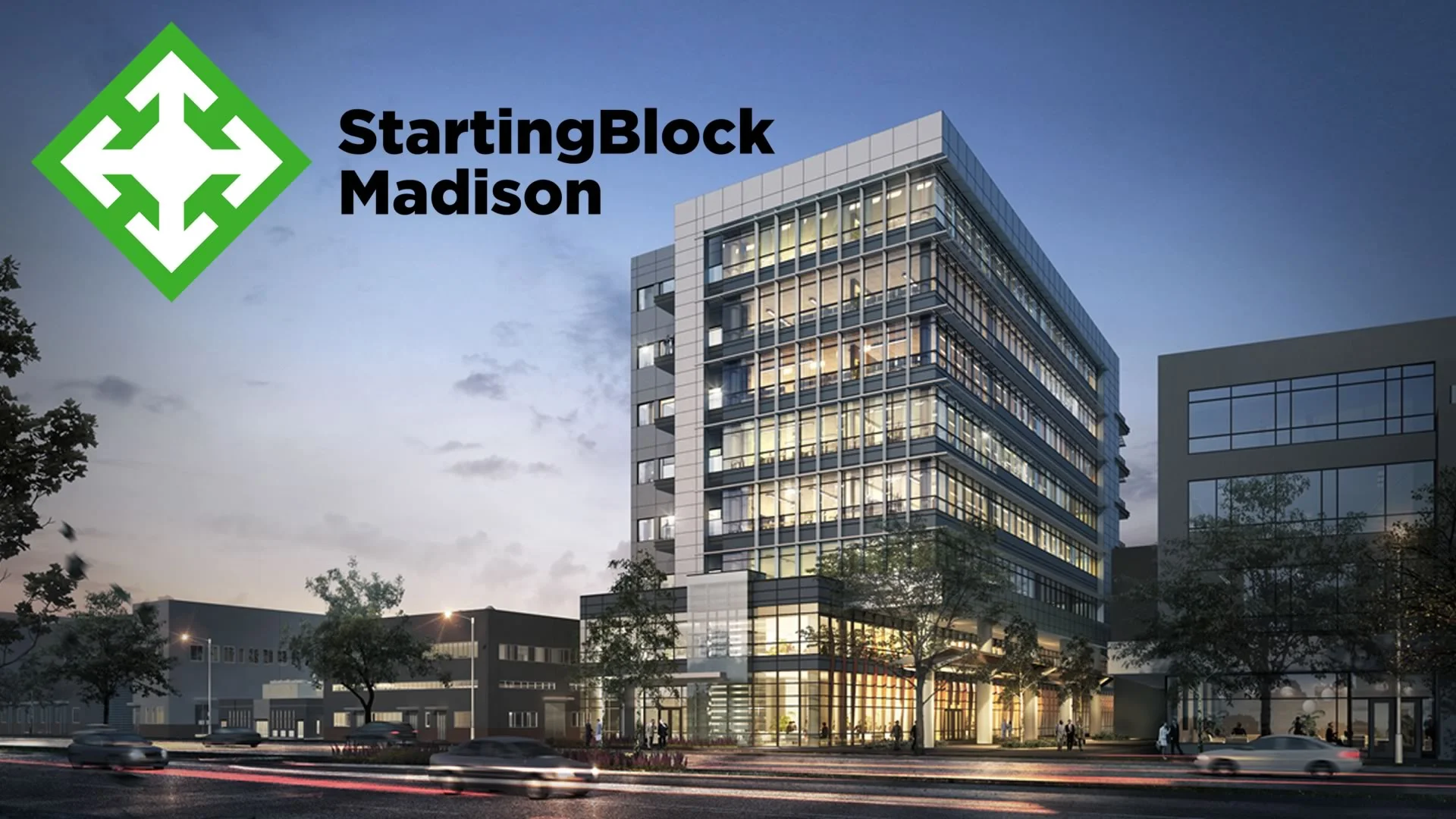
He and Jon Hardin founded Capital Entrepreneurs, an organization dedicated to sparking new business development in Madison. He also oversaw the formation of StartingBlock Madison, and became the Executive Director in 2015. StartingBlock Madison is an "entrepreneurial hub" dedicated to supporting local start-up businesses. 

According to Scott, who was one of the key visionaries on the project, “There’s no other organization like StartingBlock in the country where we have a true partnership with American Family Insurance. Where you’ll have a Fortune 500 company that occupies a building right next to a startup center. It was one of the largest public/private partnerships towards entrepreneurship in the country at its time. Taking in money from the federal government, state government, local government, as well as a large Fortune 500 company, all building a community center around entrepreneurship.” 

It started when a group of entrepreneurs and business leaders began having conversations around a center where entrepreneurs who were looking to grow or incubate an idea, could find the resources they needed all in one place. A place to work, mentorship, programs, accelerators, venture capitalists, etc. 

After some intense fundraising, they partnered with American Family Insurance, who owns the 50,000 square foot, eight story building called “the Spark.” StartingBlock occupies three floors of the building and Scott is now the organization’s “Entrepreneur in Residence.”

StartingBlock has brought in local startup-supporting organizations Capital Entrepreneurs, Gener8tor (a Midwestern startup accelerator program), the Doyenne Group (a mentorship program for women in entrepreneurship and one of the sponsors of the Madison Summit), Bunker Labs (an accelerator for veteran-led startups) The Commons (an organization that connects university students with startups), and the Wisconsin Games Alliance (a trade group for the region’s video game industry). 

Sounds awesome, right? This massive, collaborative, entrepreneurial hub will be the venue for the SCN Madison Summit!

starting-block-3d-rendering-3.jpg

From the top of the Spark building, you can look down on two lakes and all of Madison’s gorgeous downtown. The city is incredibly walkable and bike-friendly. Scott and the other Madison hosts have been hard at work building two very important things into the agenda for Madison: member interaction and time to see the city. 

“We’re building a hands-on conference where we’ll have many interactions among our members. What we believe fundamentally is the answers that will help solve our startup communities are going to be coming from the grassroots. Individually, the members of the Madison team don't have all the answers, but we know if we work together, we can come up with better solutions to solve the problems of our communities. You should expect a very interactive summit, unlike others in the past,” explains Scott.  

“The other piece,” he adds, “is about enjoying the community and having a great time. Our summit will be situated in between two lakes in Madison’s immediate downtown. Our hotels and Airbnbs are within blocks of our center, and all of the programming is within a mile and a half radius. We are a small community, which means you’ll have an opportunity to see and feel the greater Madison Community while you’re here.”  

Scott’s Role at SCN

Scott is not just a Summit host, he’s also an integral part of our Metrics and Policy Committee. So, in addition to planning the Fall Summit, Scott has been working with the metrics committee to build a digital scorecard our members will be able to use to score the health of their ecosystems. 

The scorecard pulls in standard data like venture capital inside a community but goes deeper by  pulling in information like SBA loans, Inc. 5,000 companies, patent information, and Bureau of Labor Statistics data (which measures talent). 

“Using a whole myriad of data points, we will be able to pull together an index to identify cities who are doing something special that are not being recognized in general rankings.”  

Why is Scott a Member of SCN?

“To learn best practices from all of our nation’s communities. Learning about other ecosystems and other startup communities allows me to bring best practices back to Madison. You can see where we’ve implemented new ideas that we’ve either learned from SCN or other functions through the Kauffman Foundation playing. For example, we do a monthly intro to the Madison Startup Scene as a way for anyone interested in Madison to pop in and learn how to get a foot in, inside their community. We took the idea originally from Austin and now have seen it shared throughout other SCN communities.”


Storyteller, People Connector, Ecosystem Builder: WE-C-U, Andrew

If you’ve been on committee calls or have attended some of our events this year, you’ve likely met or heard the voice of Andrew Mathew. Andrew is a recent addition to the SCN staff and works on the membership and Intercultural Unity (ICU) committees.  But who is this young guy full of passion and excitement about this work? It’s time you got to know Andrew and HIS work a little better.

IMG_0642.jpg

Andrew is a recent University of Virginia (UVA) grad who has a lot of aspiration and the natural ability to cultivate community. While Andrew was in school, he started a community of South Asian students to engage in deeper discussions that were relevant to every day college life. 

“There is a big population of South Asian students at UVA, but not many opportunities to go deeper and connect on emotional levels, especially after the tragic events of August 2017 in Charlottesville. This group was formed to have a safe space to connect, share stories, and process issues we face in our everyday life,” says Andrew. 

[For those who don’t know, the Charlottesville tragedy Andrew is referring to, is the “Unite the Right Rally” that ended in violence and the death of a Heather Heyer.]

A year ago, Andrew picked up a job in storytelling where the bulk of his work was interviewing people in the community who are engaged in powerful and innovative work. That assignment led him to interview Larkin Garbee (our current Interim Executive Director).

“I had met Larkin once before, and as soon as I took the job I knew she should be amongst the first people I interview. During the interview, we ended up talking about the communities we were working in. I mentioned to her that in college my biggest accomplishment was starting a community group of South Asian students. Larkin mentioned to me briefly that my work in college was the work she was engaged in, just in the professional field. I was intrigued, but my purpose to hang out with Larkin was to tell her story, so I wasn’t about to ask for a job. Turns out, she was three steps ahead of me. The next morning I got a call from her about working with SCN.”

You can read Andrew’s story about Larkin here. 

Andrew’s work at SCN

Andrew has been engaged with the work of the Membership committee and ICU committee for the past six months. 

On the Membership Committee, Andrew is working on towards the goal of recruiting and onboarding 500 members in all 50 states over the next two years. He has been working hard with the committee to define our membership criteria and benefits, and to make new recruits feel welcome and plugged in. 

“I love people, I always have. I’m not so good at believing in myself, but one of my greatest gifts is quickly recognizing and affirming the potential in others. Membership was a perfect place for me to do that in a growing community, but also start to believe in myself. While I have the opportunity every day to be intentional with the awesome members of SCN, I am forced to also evaluate myself, and my own worth. I’m not just the person saying hello & welcome, I’m part of the team working out the strategy and vision for what membership in SCN even means.” 

He also supports Paulo & Cecilia in their work on the ICU Committee. “Intercultural unity is not just something I’m passionate about, it’s something I have A LOT to learn about. I’ve spent so much time pouring my energy into my own peer group, now the next step in my personal and professional life is to learn how to connect different groups of people and how we can all support each other best. The work in ICU is extremely powerful for me in my personal life. It’s the kind of stuff I think about every day before and after work anyways, so to be able to work directly in that committee is a dream come true.

ICU right now is all about being known. SCN is about to grow a lot, and it’s important that ICU be one of the first things people hear, see, and know about as they’re being on-boarded into SCN. I can’t share all the details on our awesome secret projects, but a big one is just sharing out to the rest of the community what ICU is and what it hopes to accomplish.”

Andrew is most excited about the people within the SCN community he meets and interacts with every day. 

“Every time I meet someone who is in SCN or related in some way I’m starstruck. I don’t just say that. I remember when I first got to meet some of you guys at TomTom Fest. I kept calling my girlfriend after an event and debriefing my experience. When I meet you, I feel so heard and valued. I worked so hard in college to find people that cared intimately about more than just money and success. Everyone in SCN is so committed to an idea or a peer group that needs to be shared and known and loved. Working in Membership I get to see it all. It’s overwhelming. I know a lot of you do a lot of small talk/pitches/etc but every time you share what you do and where you do it, this 22-year-old flies to the moon and back. Your stories give me the confidence to be myself and pursue what matters, and you give me hope that all people will be known and heard one day. 

So often I’m struggling to find people who get it, who hear me when I say South Asians are underserved and represented. Most people “get it” like it’s some charity work. But y’all are different. You really want to know and engage in the work, even when it’s excruciatingly painful. You are my heroes and that’s what I’m most excited about working with you.  

What is Andrew working on outside of SCN?

Andrew is a storyteller at Share More Stories, and is also working on a very exciting project with a professor at Virginia Union University to introduce a Richmond specific and centered Hip-Hop archive. 

“It’s my DREAM that one day there will be a museum exhibit on the history of hip-hop in Richmond, housed in Richmond, that everyone can come and explore. The potential for our youth to come and see the stories of how people in their neighborhoods have used music to empower themselves and others, and then get to tell them that they can do the same, well there’s nothing better than that. I hope in a year or two I’ll have some more concrete things to share about this, but in the meantime, just know that our communities are not just places of opportunity and potential for the future. Our cities often have been engaged in dope work for years, but maybe they just don’t know it. Or maybe they do and they just haven’t gotten the proper recognition for it that they deserve. Highlighting these stories and people not only sheds light on the history of empowerment and strength in our communities, it also produces the best secret ingredient for current and future ecosystem building. It shares the love y’all!”

We love having Andrew as part of our team. If you’d like to join him on either the membership committee or ICU committees, or just want to pick his brain about music education and hip-hop, reach out!

Spreading Pride and Inclusivity from Ecosystem to Ecosystem

Chris Cain, Chief Experience Officer at Alternatives Federal Credit Union & SCN Communications CoChair

Chris Cain, Chief Experience Officer at Alternatives Federal Credit Union & SCN Communications CoChair

SCN Communications Co-Chair Chris Cain recently made a big move: from rural Staunton Virginia, where she was the Director of the Staunton Innovation Hub, to Alternatives Federal Credit Union in Ithaca, New York. It seems as though no matter what ecosystem she’s in, Chris is passionate about cultivating programs and spaces of inclusion. Before she left Staunton, she was integral in helping the Shenandoah LGBTQ Center get started. You can read more about the efforts on the Kauffman Foundation blog here.

Now, settled into her new role as the Chief Experience Officer at Alternatives Federal Credit Union, Chris is helping to provide life-changing resources for the LGBTQ community. This week,  Alternatives just announced the launch of its TransAction Financial Empowerment Program, a program to provide financial loans to transgender and non-binary community members.

“This program is one of the first in the United States that is specifically for transgender and non-binary community members. It’s a huge deal and I am excited to be a part of it,” says Chris.

TransAction provides access to funds to support gender affirmation, such as hormone therapy, vocal coaching, new wardrobes, legal documentation updates, and surgeries/procedures—without the risks of high-interest credit or predatory lenders.

There are two kinds of loans:

  • A personal loan for one-time expenses related to gender-affirming surgeries and related costs and one-time expenses for transition-related clothing, vocal training, and other needs.

  • A line of credit for ongoing transition-related care and expenses.

This is just one example of the life-changing - ecosystem building type of work Alternatives does -  and it’s part of the reason Chris left Staunton Innovation Hub and relocated to Ithaca. But the story is a little deeper than getting a new job. Chris actually developed her passion for community building at Alternatives. After attending VCU in Richmond and getting a job at Capital One, a few things became apparent to her.

“I learned a lot about money at Captial One - and a lot about what I didn’t want to do.”

Chris left Capital One, moved to Ithaca, and became a teller at Alternatives. She learned a lot about community development and learned how to use traditional financial tools to help people out of poverty. She took what she learned to help run the student credit union and teach financial literacy courses to kids in the community. She then moved back to Richmond and became the Director of Asset Building at New Richmond New Ventures, a Women’s Business Center. From there, she went on to be the Executive Director of the Staunton Creative Community Fund, then became Director at the Staunton Innovation Hub in Staunton, Virginia.

“I have helped people out of poverty, helped teach the power of financial literacy, and helped fund companies for people in marginalized communities. I learned how to do all this amazing work at Alternatives.”

Tell us about your new role and why you are excited about it

“As the Chief Experience Officer, I head up the marketing department, development department (fundraising), and community programs (like financial literacy classes, free tax prep, small business development education). But what that really means is I help raise the money to launch innovative initiatives that help people out of poverty and then tell the world about it.”

Tell us about Alternatives Credit Union and what drew you to back the organization

“Alternatives has been fighting for economic justice for 40 years and is a model credit union on a national level. We believe that true financial inclusion and empowerment is a fundamental right. We create programs designed to close the gap and remove barriers to financial stability and success. Our services are geared towards people who have been marginalized and have little resources. We have checking and savings accounts where people who have had a rough financial history can start fresh. We have small business loans that are character-based lending rather than credit based lending. What that means is we look at your business strategy and non-monetary connections within your community.

At Alternatives, I have an opportunity to really push the envelope on how money can help impact the community. I’m coming back to be a part of the next generation of leadership. This is real. It’s taking money, education, and support, and fundamentally changing peoples lives. I couldn’t wait to be able to do that. Being able to get money back into the hands of people who have been disenfranchised their entire lives is what I want to do with my life.”

And she’s doing it!

How can people within the financial services industry serve as entrepreneurial ecosystem builders in their communities?

“They are. They just don’t know that they are. Financial institutions can play important roles within their ecosystems by simply listening to the needs of entrepreneurs and creating the tools to help them. VCs and Angel Investors are awesome, but they aren’t the answer.”

Chris believes that financial institutions should pair up with coworking spaces and accelerators to offer the financial tools that entrepreneurs need.

“There is a disconnect between services for entrepreneurs and banking services because most mainstream banks don’t have the resources to do the one on one support entrepreneurs need. And, it’s not profitable. The attention generally goes to the high growth tech startups and not to the small startups that need that kind of help.”

Here’s one huge impact Alternatives has made in their community. They were one of the first financial organizations to do a living wage study in order to ensure they were paying their employees a fair wage. Their living wage study has become a tool of industry throughout the country for 25 years!

“We took a hard look at how income inequality works in our organization and are taking a stance on that by closing the gap with both our pay and raise structure.”

How can entrepreneurial ecosystem builders leverage financial institutions to better serve their communities?

“Ecosystem Builders should start by having the internal dialogue for how they can pair up with financial institutions that care about entrepreneurship, and have the tools or have the capacity to create the tools, to help move the ecosystem forward.”

Chris encourages fellow ecosystem builders to seek out the credit unions who care and engage them.

“Do an asset inventory of your region and find out who is doing the work that places like Alternatives or the Staunton Creative Community Fund are doing. Talk to them about who their clients are. See how you can partner.”

What is an entrepreneurial ecosystem builder to you?

“An entrepreneurial ecosystem is the way to connect people and resources together in a way that is organic to help entrepreneurs. An ecosystem builder is the person right in the middle of all that - orchestrating connections to people and resources. You could work at a credit union and be an ecosystem builder. You could work at City Hall and be an ecosystem builder.”

We can’t wait to see what Chris’ expertise and passion will bring to Alternatives Federal Credit Union, and the communities she seeks to empower.

Interim Executive Director Larkin Garbee

Richmond Ecosystem Builder Larkin Garbee Appointed Interim Executive Director of Startup Champions Network

Official Press Release

Richmond, VA October 3, 2018 Larkin Garbee has been chosen as the Interim Executive Director and Board Chair of the Texas-based non-profit, Startup Champions Network by the organization’s board of directors.  Larkin has over thirteen years of leadership, development, and management experience.  Her long history of interim and transition work most recently has included serving as the founder or cofounder of 804RVA, Lighthouse Labs, Startup Virginia, and RVA Makerfest. Larkin also currently sits on the board of Girls for A Change.  

Larkin.image.jpg

“Larkin's extensive knowledge and experience as an inclusive community builder in Richmond, combined with her passion for ecosystem building and innovation, is what made her the perfect fit to serve as Interim Executive Director. The board is excited to have her lead our organization and help continue our work connecting and providing resources for entrepreneurship ecosystem builders.” - Mike Binko, board member and co-founder of Startup Maryland.

Larkin will work closely with the Board of Directors and leadership committees to identify immediate priorities to build trust, sustainability, organizational strategy and strengthen communications and capacity. Her first major milestone with the organization was obtaining funding from the Ewing Kauffman Foundation. Announced during Denver Startup Week, the Kauffman Foundation grant award will help SCN formalize and professionalize efforts around creating sustainable economic impact by supporting innovators and entrepreneurs in any community.

“In the U.S., we have seen a rise in startup and innovation activity outside of typical epicenters like Silicon Valley. These developments are a direct result of the work of entrepreneurial ecosystem builders who are driving economic outcomes by creating local and regional initiatives that support and grow new businesses. I have benefitted from having access to this network while cultivating an entrepreneurial ecosystem in Richmond, Virginia. I am honored to have the opportunity to now lead this national network of entrepreneurial ecosystem builders so we can continue to share best practices and learn from each other. Startup Champions Network is eager to engage with the Ewing Marion Kauffman Foundation on an ambitious plan to amplify and scale the efforts of entrepreneurial ecosystem builders so that thriving and inclusive communities can exist across our nation.” - Larkin Garbee

Larkin Garbee Bio 

Larkin Garbee is a founding member and current Chair of the Startup Champions Network. She is an ecosystem builder and civic instigator with a passion for supporting founders and building inclusive communities.

In 2011, Larkin founded 804RVA, Richmond, Virginia’s first technology-focused coworking space. In 2012, she joined Startup America and expanded her work from community building to startup ecosystem building. Since then, Larkin has launched Lighthouse Labs (a top 20 nationally-ranked accelerator), Startup Virginia (an incubator), RVA Makerfest (which attracts 10,000 participants annually), and a pre-accelerator at Virginia Commonwealth University. She brought national programs to Richmond, including Unreasonable Labs, CoStarters, Startup Weekend, and Startup NEXT and has hosted over 900 technology and entrepreneurial events.

Larkin has presented at the White House about connecting Virginia’s entrepreneurial hubs, was recognized by Style Weekly’s Top 40 Under 40, and currently serves as a board member for Girls for a Change. She is a serial entrepreneur whose current mission is to support and build diverse and inclusive ecosystems.


SCN Denver Summit News

Exciting News From the SCN Denver Summit & Denver Startup Week

Our Denver Summit kicked off this week amidst the flurry of activity in Denver for Denver Startup Week. It has been awesome to meet with our members and be among so many innovation ecosystem builders.

SCN-Denver-Group.jpeg

We are delighted to be running the official Ecosystem Building Track during Denver Startup Week while also continuing a deep-dive on inclusivity and diversity via our Inter-Cultural Unity (I-CU) programming.

So far, we’ve heard from Scott Case and Steve Nager on the power of connections and ecosystem building, NFL players Ryan Shaw and Shadow on learning to work and live with your fears, and we’ve had some amazing breakout sessions that spoke to the core of ecosystem building.

To wrap our programming for Denver Startup Week, as the Startup Ecosystem Building Track, we have a few exciting (and big) announcements!

First, we are elated to announce a collaboration with the Ewing Marion Kauffman Foundation! They have awarded us a grant that will help formalize and professionalize our efforts around creating sustainable economic impact by supporting innovators and entrepreneurs.

“We are energized to engage with Kauffman Foundation on an ambitious plan to amplify and scale the efforts of ecosystem builders. As the guiding light for activation of the entrepreneurial spirit for more than 50 years, the Kauffman Foundation has become a trusted peer in support of the SCN mission, vision and values.” - Larkin Garbee, Interim Executive Director of the Startup Champions Network

In the U.S., we have seen a rise in startup and innovation activity outside of typical epicenters like Silicon Valley. These developments are a direct result of the work of entrepreneurial ecosystem builders who are driving economic outcomes by creating local and regional initiatives that support and grow new businesses. SCN’s primary mission is to connect ecosystem builders so they can share best practices and learn from each other – no matter where they operate. In order to achieve this vision and activate the SCN values at-scale, we encourage and welcome the support of other organizations.

“We are delighted to see where the SCN team has taken the craft of ecosystem building.  With their micro-level access to ecosystem builders across the country and our focus on empowering communities to scale the entrepreneurial spirit in their communities we look forward to working with SCN and learning from their knowledge and experience in this space while also helping them become a formalized and even more effective ecosystem support organization.” - Philip Gaskin, Director of Entrepreneurial Communities at the Kauffman Foundation

It's tough to overstate the importance of this development for SCN and Entrepreneurial Ecosystems across the country and this grant will help our organization continue to drive forward. With that, we come to our second exciting announcement: the locations of our next two summits! Our SCN Spring Summit will be held in Portland, Oregon and our SCN Fall Summit will be held in Madison, Wisconsin.

Not a member of SCN? Join a network of passionate Ecosystem Builders.